A wish changes with emotions. A commitment changes the one who made it.
Every dream has a beginning, but only a few become a destiny. The difference is commitment. As the vision of Vayu Mahesh became clearer, I also began to understand the scale of what I had been called to do. This wasn't a project that could be completed in a year or two. It wasn't something I could pursue only when life was convenient. If this temple was ever going to exist, it would demand years of unwavering commitment.
Around that time, my dreams became more vivid than ever. Sometimes I would find myself in the presence of yogis. Sometimes there would be no words, only a deep knowing. And somehow, the same message kept returning in different forms: A work of this magnitude needs a Sankalp—not a wish, not motivation, but a Sankalp.
Again and again, one number began appearing within me: 108. I never sat down and decided that I would choose 108 Purnimas. It wasn't an intellectual decision. If someone had asked me why 108, I wouldn't have been able to explain it. I simply knew. There was a pull towards that number that I couldn't ignore.
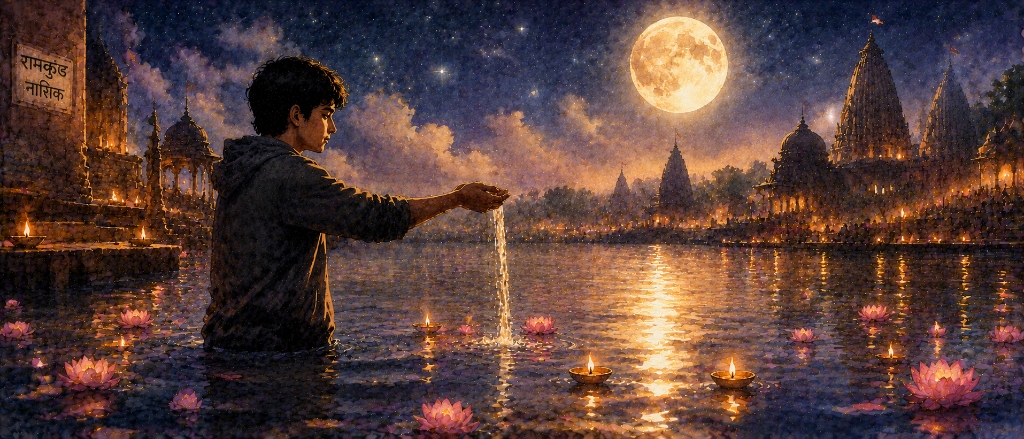
And then came one particular Purnima. Even today, I cannot fully explain what was different about that full moon. Outwardly, it looked no different from the countless Purnimas that had come before it. But inwardly, everything had changed. It felt as though that night had been waiting for me. People often say that we choose our vows; my experience was the opposite: I did not choose that Purnima, that Purnima chose me.
On that night, something within me became absolutely still. There was no excitement, no emotional high, no dramatic experience—only certainty. I knew that if I wanted to build something that could outlive me, I first had to become someone who could remain committed longer than my changing emotions, my fears, my failures, and even my successes.
That night, I took a Sankalp of 108 Purnimas—nearly nine years. In Sanatana Dharma, 108 is more than a sacred number. It represents completeness, discipline, and a spiritual cycle of transformation. It is said that when a Sankalp is carried with sincerity through 108 full moons, nature itself begins to support that intention. Whether one calls it grace, destiny, or the quiet law of life, something begins to move beyond personal effort. I don't know whether that is true for everyone, but I knew it was true for me.
From that moment onward, my life stopped belonging entirely to me. Every decision, every opportunity, every sacrifice would now be weighed against one question: Does this serve the Sankalp? Because once a true Sankalp is taken, you no longer wake up each morning asking yourself whether you feel like continuing. The decision has already been made; you simply keep walking.
The temple did not exist. The land did not exist. The resources did not exist. But the vow existed. And sometimes, a vow is more powerful than anything that already exists in the physical world.